

.svg)
.png)
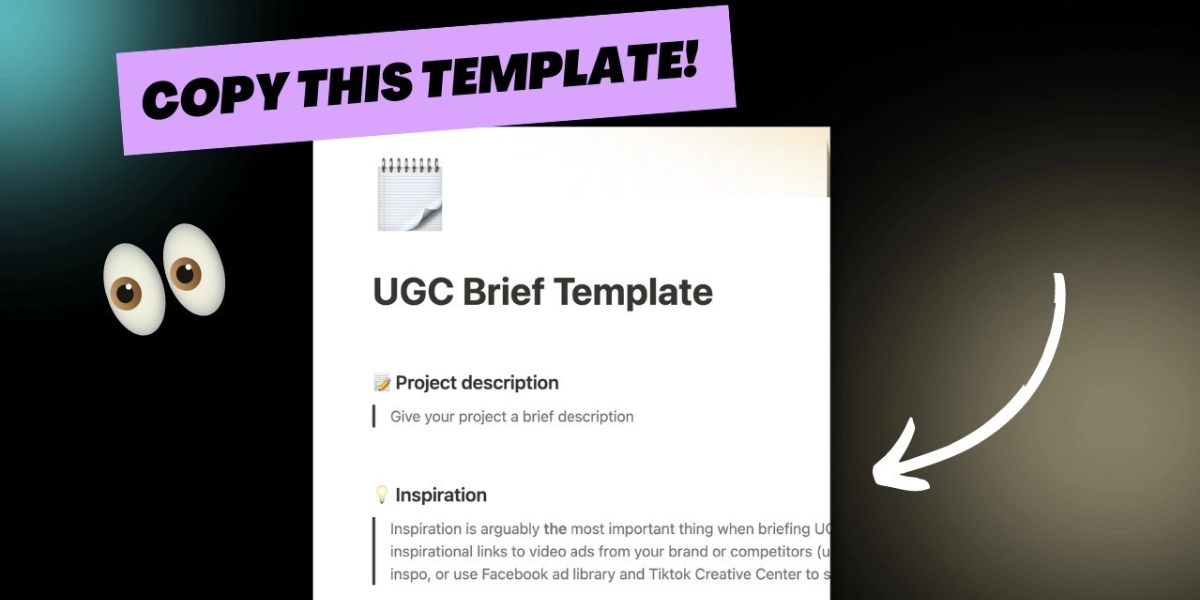
A great TikTok creator brief tells the creator what the product does, who it is for, what they can and cannot say, and how to open and close the video, then leaves the rest to them. It is short enough to read in a few minutes and specific enough that the first video can sell without a reshoot.
Why the brief matters on TikTok Shop
On TikTok Shop, creator videos are the shop window. Affiliate creators sell mainly through short videos with a product link, so the content has to explain the product and prompt a purchase in a short space of time. A vague brief produces videos that look good but do not sell. An over-written brief produces videos that sound like adverts, and viewers scroll past them.
The brief also protects the brand. It is where you set out which claims a creator can make, which words to avoid and how the offer should be described. If something goes wrong in a video, the cause is often a gap in the brief.
Start with a brief-input form
Before anyone writes a word of the brief, Pear collects the inputs from the brand in a standard form. This keeps every brief grounded in facts the brand has confirmed, rather than assumptions. The form covers:
- The product, including the exact name, variant and pack size creators will receive
- The one problem the product solves
- The target buyer
- Approved claims the creator can use
- Banned words and phrases
- The current offer, if there is one
- Examples of winning videos, from the brand's own shop or the category
If any of these inputs is missing, the brief waits. A brief written on guesswork tends to need rewriting once the brand reviews it.
One problem, one message
A creator brief should carry a single message. Pick the one problem the product solves for the target buyer and build the video around it. A cleaning spray bought for limescale should be shown removing limescale, not listed alongside every other surface it can be used on.
Trying to cover every feature makes the video longer and the message weaker. If a product has several strong benefits, write separate briefs and send different creators different angles. The weekly sales data will then show which message works best.
Hooks and calls to action are the biggest lever
In Pear's experience, the opening seconds and the call to action are where most of the difference in conversion comes from. A strong product demonstration does little if viewers have scrolled away before it starts, or if they reach the end of the video without being told what to do next.
A good brief gives the creator several hook options to choose from or adapt, such as a question the target buyer would ask, a before-and-after moment or a direct statement of the problem. It also spells out the call to action: tap the product link, use the offer while it is live, or buy a specific bundle. The creator can phrase these in their own words, but the intent should be clear.
Show the key demonstration
Every product has a moment that proves it works. For a stain remover it is the stain disappearing. For a snack it might be the texture or the ingredients panel. For skincare it could be how the product feels on application. Name that moment in the brief and ask the creator to film it clearly and close up.
The demonstration is what turns a recommendation into a purchase. Without it, the viewer has only the creator's word.
Approved claims only
Creators can only use claims from the brand's approved claims register, the list of statements the brand has evidence to support. Pear builds this register with each brand before any brief goes out. Pear briefs never include "#1", "the best" or similar superlatives.
Affiliate and paid creator content counts as advertising in the UK, so the same advertising rules apply as for a brand's own adverts. Clear approved claims and a banned words list make it easier for creators to stay within those rules and within TikTok Shop's own content policies.
Do's and don'ts, without a script
A short list of do's and don'ts covers practical points that are easy to miss: show the product label, mention the offer, avoid talking about prices that may change, do not compare the product to a named competitor. Keep the list short. A page of rules signals that the brand does not trust the creator.
Then leave room for the creator's own style. The creators worth working with already know how their audience responds, and their best-performing videos sound like them. A brief is a guide to what the video must achieve, not a script to read aloud.
An example brief outline
Here is the structure Pear uses for a single-product creator brief. Each section is short, often one or two lines.
- Product: name, variant and what is in the sample
- The problem it solves: one sentence
- Who it is for: the target buyer in plain terms
- Hook options: three or four openings the creator can use or adapt
- Key demonstration: the moment to film close up
- Single message: the one thing the viewer should remember
- Approved claims: copied from the claims register
- Offer: current promotion or bundle, if any
- Call to action: what the viewer should do and where to tap
- Do's and don'ts: a short list, including banned words
- Examples: links to two or three winning videos for reference
Review, approve and version the brief
Pear allows two rounds of revision with the brand before a brief is final. Each version is numbered, so everyone knows which brief a creator received and which claims were approved at the time. This matters when a brief is updated mid-campaign, for example when an offer changes or a new claim is approved.
Once approved, the brief is sent to every creator working on that product. Sending each creator one product, with one brief, keeps the content focused and makes results easier to compare.
Pair the brief with clear incentives
A good brief works best alongside a commission structure creators understand. When creators know exactly what they earn and how they can earn more, they put more effort into the content. Pear starts with a free sample plus commission, then adds bonuses and competitions for strong sellers, paid videos where they are justified, and retainers only for creators with a proven record. More on how this fits together is on our TikTok Shop affiliate marketing page.
Use sales data to improve the brief
A brief should change as results come in. Pear ranks videos every week by sales into top, middle and bottom groups, then looks at what the top videos have in common: the hook, the demonstration, the length, the call to action. Those patterns go into the next version of the brief, and the strongest videos are boosted with Spark Ads.
Our work with The Antidotes shows the effect of this approach. Branded briefs, together with a focus on creator quality over volume and rebalanced commissions, helped The Antidotes grow GMV by 60%, from £137k to £219k in two months, while posting 31% fewer videos. Click-to-order rate rose by 130% and GMV per video rose from £30 to £69.
FAQs
How long should a TikTok creator brief be?
Short enough to read in a few minutes. One page is usually enough for a single product. If the brief runs much longer, it is probably trying to cover too many messages or reading like a script.
Should a brief include a script?
No. Give the creator hook options, the key demonstration, the message and the call to action, and let them say it in their own words. Scripted videos tend to sound like adverts, which viewers recognise and skip.
What claims can creators make about my product?
Only claims your brand can support with evidence, listed in an approved claims register. Avoid "#1", "the best" and other superlatives, and give creators a list of banned words so they know what to avoid.
Pear is a registered TikTok Shop Partner, recognised by TikTok as a top five TikTok Shop Partner for FMCG, and co-founder Tom Stanley is a former TikTok employee. If you would like help writing briefs that creators can sell from, book a free consultation with our team.

.png)
.webp)


.svg)
